

Self-help's newest grift: AI
The malicious reasons behind self-help’s latest trend.

Disclaimer: All opinions shared are my own (backed by feelings) and all facts are backed by linked and cited sources. This post is meant for educational purposes and not meant to personally attack an individual.
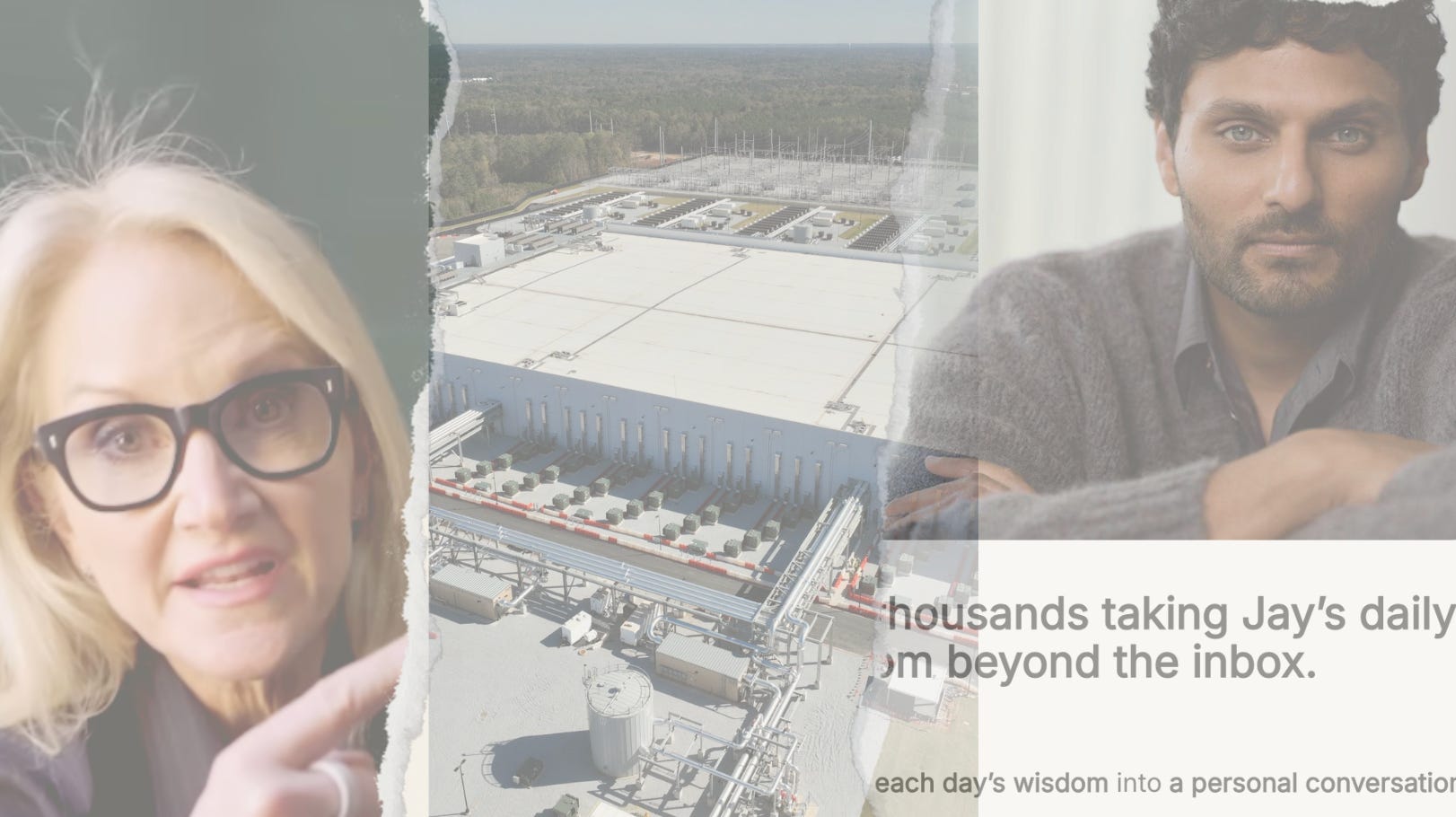
This past week, Mel Robbins (unsurprisingly) became the latest grifter shilling AI.
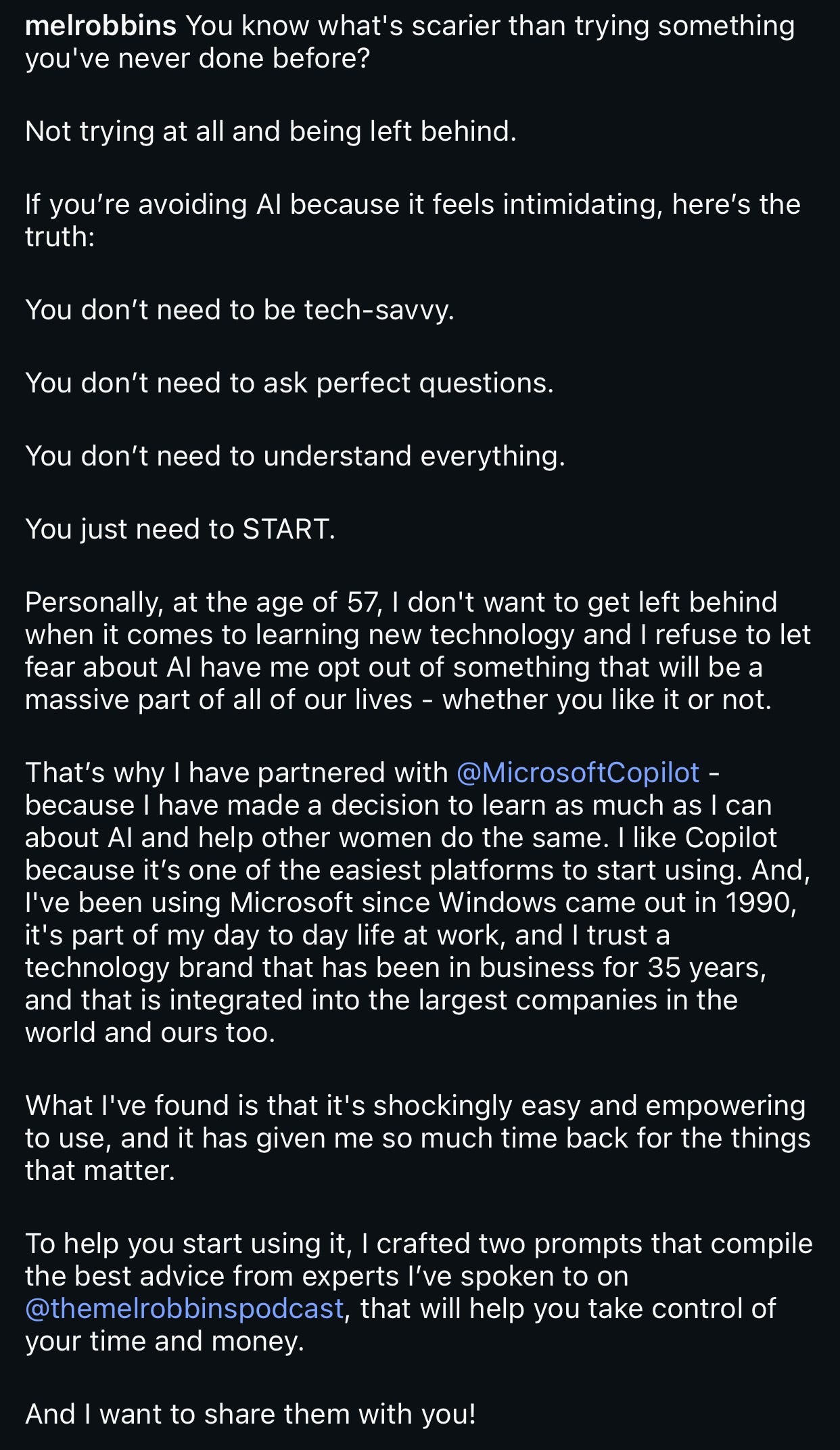
In Robbins’ video posted to Instagram, she uses fear-mongering tactics warning women that they’ll be “left behind” using AI because it “feels intimidating”, citing a 2025 Harvard study on the gender gap adoption of AI.
She goes on to partner with Microsoft and encourages her users to start with inputting a prompt into Microsoft’s Copilot. The prompt? Sharing bank account statements, debt statements, and income info in order to help create a budget.
This latest grift in the self-help industry is far from surprising. It feels like the era of Matt Damon’s cringy 2021 crypto commercial all over again. And that’s because that’s exactly what it is.
Although this wasn’t disclosed in Robbins’ post, it wouldn’t surprise me if Microsoft paid Robbins a large amount of money to promote Copilot because they know that her audience is vulnerable, largely female, and trusts Robbins when looking for advice. In order to literally capitalize on this, Microsoft didn’t just pay for Robbins to promote AI usage, but also preys on her audience to get extremely valuable data (note: Please, please, please don’t give AI sensitive documents like this).
Profit is king here and it’s a trend we’ll continue seeing in the self-help world and beyond. Self-help gurus like Mel Robbins aren’t just promoting AI use, but they’re profiting off of it and even creating their own products with it (as we know, there’s nothing self-help gurus love more than selling a product).
Jay Shetty launched an “Al Coaching Companion” to his newsletters for only $47 a year.
Tony Robbins is selling an AI chatbot so you can “Chat with Tony now” for only $39 a month.
Mark Manson is selling an “AI-powered growth mentoring app” that only costs $19.99 a month.
Natalie MacNeil is selling an AI business course for $997 (don’t worry though, it’s a $9,500 value!)
The most egregious part of these products (apart from them being AI) is the fact that, once again, self-help gurus are selling a product that you can get for free. I guarantee that these “products” are just using an AI prompt that asks the AI to reference all the guru’s materials and tone of voice to answer the questions. You could input the same prompt into any AI and get the same quality of responses for free.
Regardless, you shouldn’t be doing this to get your advice on anything. To be fair, you’re probably going to get the same quality advice from an AI agent that you would from one of these self-help gurus who have no qualifications whatsoever to be giving people advice. All of it is slop and all of it is dangerous.
FOMO is not the problem
What Mel Robbins and other AI grifters don’t understand is that the reason why people aren’t adopting AI isn’t because they’re afraid of change or of new technology. The way to get people to adopt AI isn’t to fearmonger.
Gurus are also trying to soft-launch AI by saying they get why people don’t like it and Jenna Kutcher even said, “You Don’t Have to Love AI to Use It”.
But what they fail to understand is that not using AI has nothing to do with being afraid and if you actually think the technology is detrimental then you don’t have to use it.
The reason why people don’t use AI is because they clearly understand the human and environmental costs of using it.
Data centers for AI are generally built in low-income areas and the environmental injustice that’s a consequence of this is staggering.
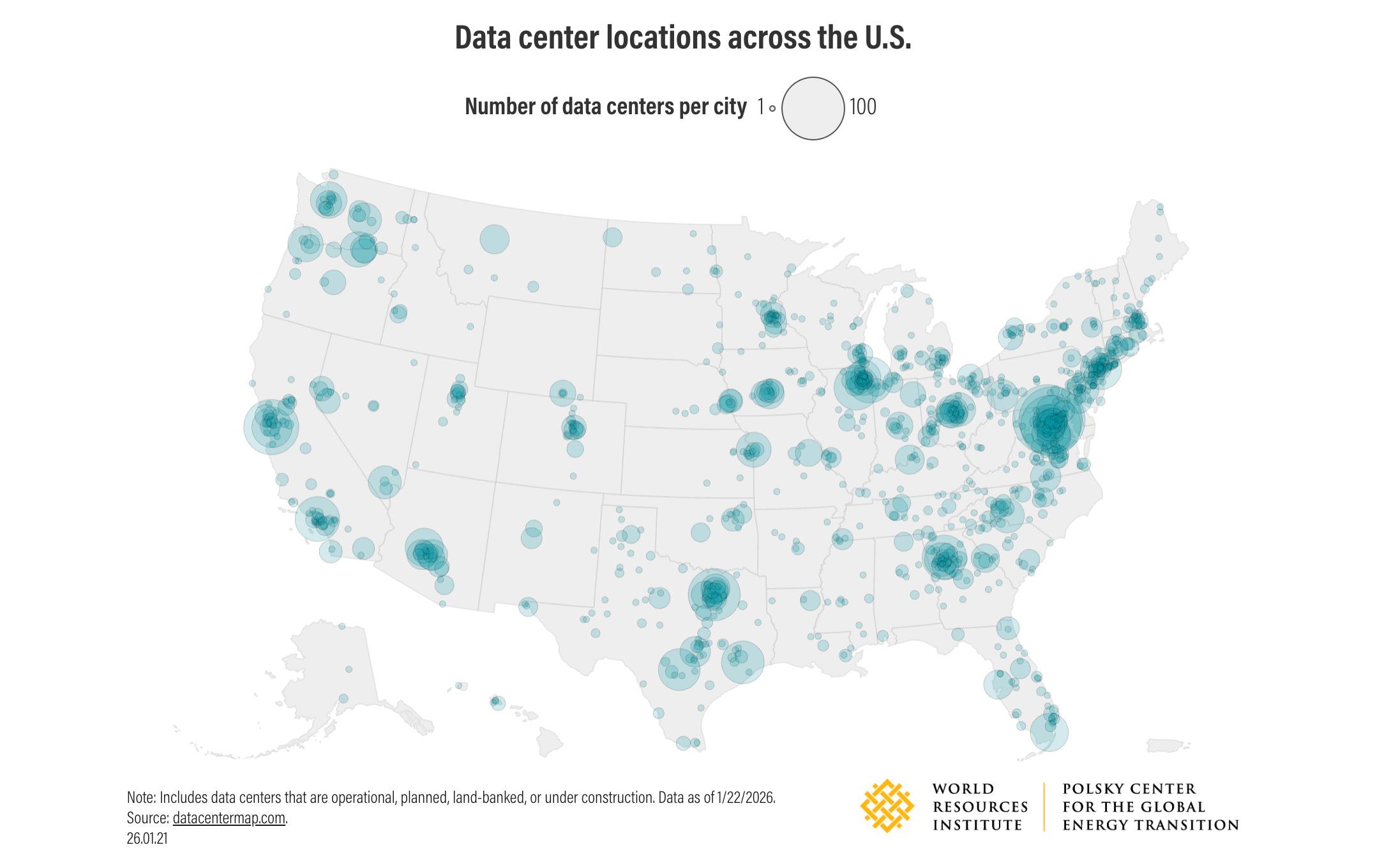
Many data centers use diesel-powered backup generators which emit 200-600 times more nitrogen oxides into the air compared to natural gas plants. This results in air pollution causing asthma and respiratory diseases for those who live in the community.
The HVAC systems used in data centers create a constant noise pollution of up to 97 decibels.
Finally, the power and water use increases electricity prices and water scarcity in the areas.
The environmental impact of AI goes beyond just the communities near data centers. It’s estimated that by 2030, data centers will consume over 660 billion liters of water each year with 500ml being used for small prompts.
So, no, I don’t think you can assume that women don’t use AI simply because they’re afraid of new technology. Not when there are ethical implications of using it.
The end game
The obvious reason for the shift into AI for the self-help industry is because that’s what’s profitable right now. And who is profiting matters.
Alex Karp, the CEO of Palantir, is currently using AI technology for targeting and murdering civilians with drones, satellites, and sensors throughout Palestine and the Middle East. Karp himself has stated that “Palantir is here to disrupt and make the institutions we partner with the very best in the world. And, when it’s necessary, to scare enemies, and on occasion, kill them.”
Sam Altman, the CEO of OpenAI has faced a myriad of lawsuits and is facing sexual abuse charges from his sister.
It matters who is profiting off this not just because they’re making money, but because their end goal goes beyond just profit.
In recent studies, it has been proven that AI is making us less intelligent, and this is by design. A 2025 MIT study showed that ChatGPT users “consistently underperformed at neural, linguistic, and behavioral levels” all of this worsening over time.
A 2025 report from Stanford, showcased the dangers of using AI for mental health purposes due to its biases and hallucinations (again, further proof that you should not be using any of these self-help guru chatbots).
When oligarchs are in power, they will do anything to maintain that power. And the most impactful thing that they can do in order to maintain that power is to make those they rule over powerless. And the most effective way to do that? Eliminate critical thinking and human interaction.
This is what AI is built for. And it’s what we need to fight against.
This all fits hand-in-hand with the overall goal of the self-help movement. By focusing on problems of the “self” and internalizing everything as your fault, the people in power successfully steer you away from recognizing that many issues we face as individuals stem from systemic causes. Those in power don’t want to change these systemic causes that continue to help them profit.
The self-help industry plays a key role in this mentality and of maintaining the status quo by continuously repeating this messaging of self-improvement and distracting people with products that promise to change their lives if they only try hard enough. The addition of AI is only strengthening this mentality and further dismantiling critical thinking and community care.
We are not falling behind because we’re not listening to billionaire propaganda that’s begging us to use a product we don’t need so their bubble doesn’t burst. It’s being acutely aware of the future ahead and holding tight to what creates actual, positive change in this world.
Further reading
contains affiliate links